Your Terry vs ohio summary images are ready. Terry vs ohio summary are a topic that is being searched for and liked by netizens now. You can Get the Terry vs ohio summary files here. Find and Download all royalty-free images.
If you’re looking for terry vs ohio summary images information linked to the terry vs ohio summary keyword, you have visit the right site. Our website always provides you with suggestions for downloading the highest quality video and image content, please kindly surf and find more informative video content and images that match your interests.
Terry Vs Ohio Summary. The Petitioner John W. The Petitioner John W. The two were observed proceeding alternately back and forth along a similar path in which they stared at the same. Ohio monday november 7 2016 1210 am 1967 facts.
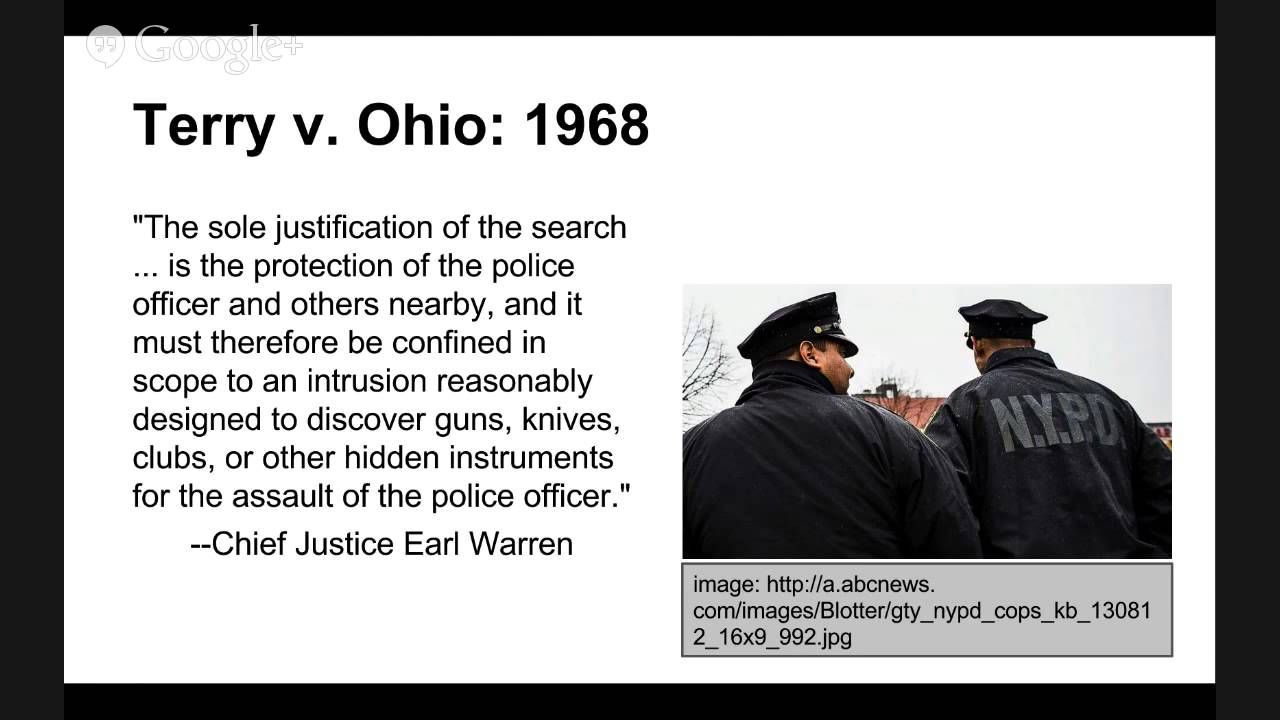 The Supreme Court Precedent Cases Terry V Ohio 1968 Youtube From youtube.com
Stop-and-frisk had always been a police practice but validation from the Supreme Court meant that the practice became more widely accepted. The Supreme Court of Ohio dismissed their appeal on the ground that no substantial constitutional question was involved. December 12 1967 Argued. Case Summary of Terry v. SUPREME COURT OF THE UNITED STATES. Ohio monday november 7 2016 1210 am 1967 facts.
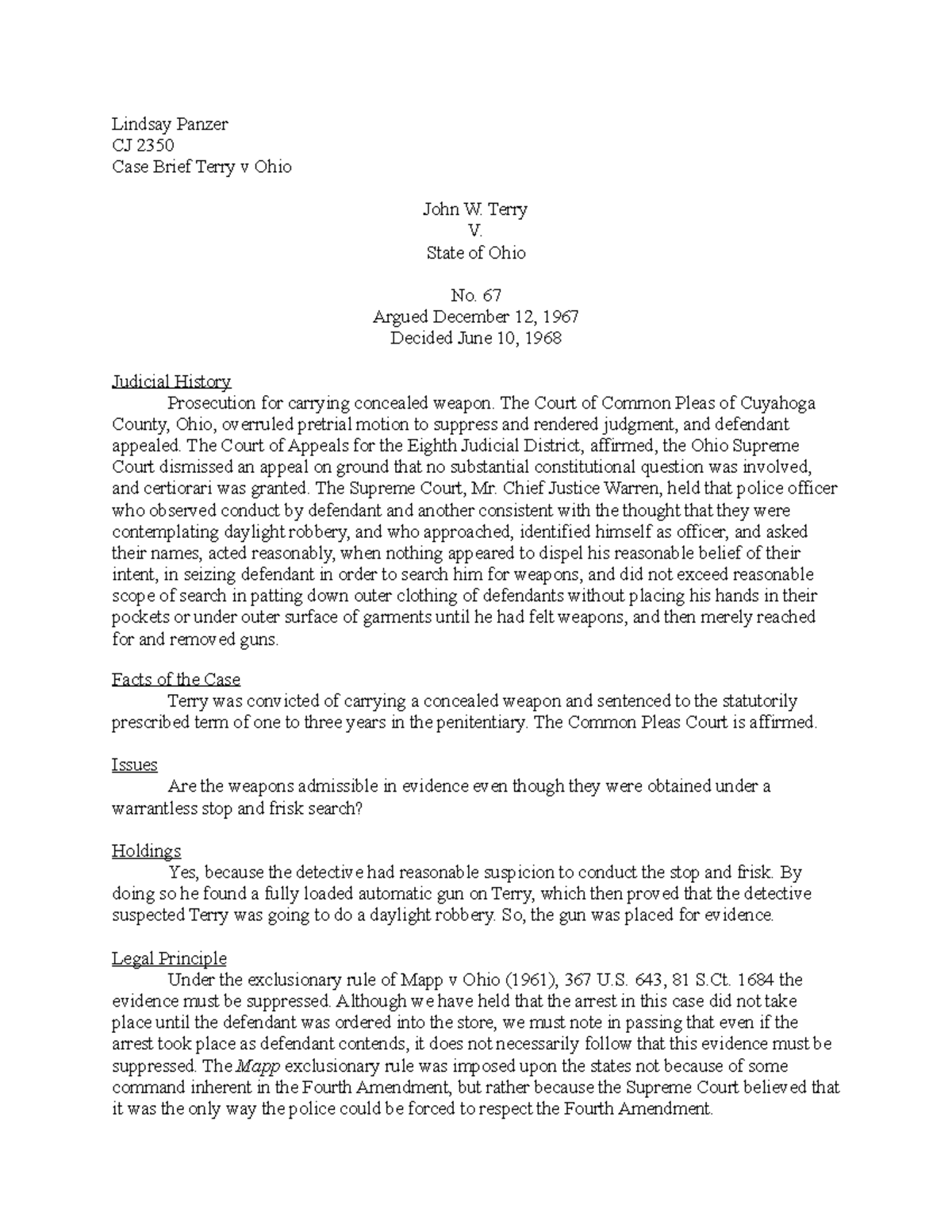
Terry was convicted of carrying a concealed weapon and sentenced to three years in jail.
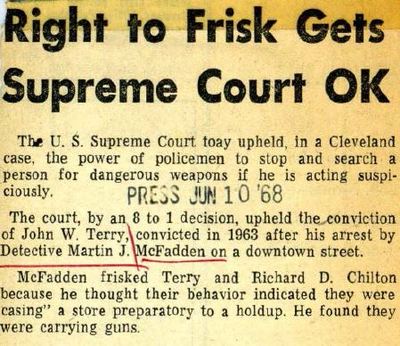
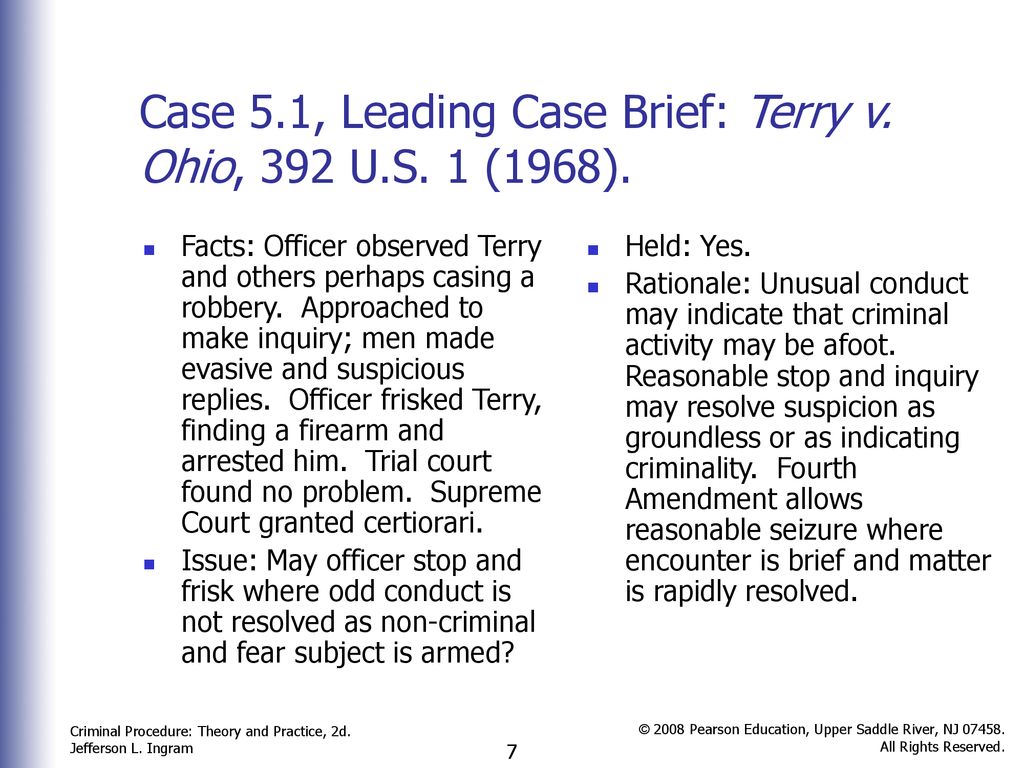
The incident took place on 31 st October 1963 Harris 2012. Stop-and-frisk had always been a police practice but validation from the Supreme Court meant that the practice became more widely accepted. Ohio Three men including Terry defendant were approached by an officer who had observed their alleged suspicious behavior. Summary The Terry case was a complex one involving questions of whether the officer had a reasonable cause to act whether a pat down constituted an illegal search and whether. Decided June 10 1968. Following his usual patrol on a downbeat for several years a Cleveland detective saw two strangers ie.
 Source: coursehero.com
Supreme Court decision issued on June 10 1968 which held that stop-and-frisk searches conducted without probable cause do not necessarily violate the prohibition of unreasonable searches and seizures under the Fourth Amendment to the US. 1968 Name Instructor Course Title Date Submitted Terry vs. SUPREME COURT OF THE UNITED STATES. After the officer inquired into what they were doing the men responded by mumbling. The Supreme Court ruled in favor of the state of Ohio and the Cleveland police who conducted a stop-and-frisk of a suspect named Terry.
 Source: modernalternativemama.com
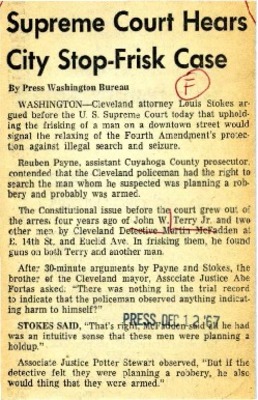
SUPREME COURT OF THE UNITED STATES. Supreme Court decision issued on June 10 1968 which held that stop-and-frisk searches conducted without probable cause do not necessarily violate the prohibition of unreasonable searches and seizures under the Fourth Amendment to the US. Jun 10 1968 Facts of the case Terry and two other men were observed by a plain clothes policeman in what the officer believed to be casing a job a stick-up The officer stopped and frisked the three men and found weapons on two of them. Argued December 12 1967. Ohio Three men including Terry defendant were approached by an officer who had observed their alleged suspicious behavior.
 Source: studocu.com
Later known as the stop and frisk case Terry v. A Cleveland detective McFadden on a downtown beat which he had been patrolling for many years observed two strangers petitioner and another man Chilton on a street corner. The Petitioner John W. The Supreme Court ruled in favor of the state of Ohio and the Cleveland police who conducted a stop-and-frisk of a suspect named Terry. The Petitioner John W.
 Source: slideplayer.com
Ohio Case Brief Summary - 497 Words Cram Show More Check Writing Quality History. Ohio represents a clash between Fourth Amendment protection from intrusive harassing conduct by police when no crime has been committed and the duty of an officer to investigate suspicious behavior and prevent crime. The officer suspected the men were planning to rob the store. While on patrol you see two men standing in the front of a store peeking through the window. Supreme Court decision issued on June 10 1968 which held that stop-and-frisk searches conducted without probable cause do not necessarily violate the prohibition of unreasonable searches and seizures under the Fourth Amendment to the US.
 Source: lawaspect.com
While on patrol you see two men standing in the front of a store peeking through the window. Synopsis of Rule of Law. 1 1968 Terry v. 1968 Name Instructor Course Title Date Submitted Terry vs. We granted certiorari 387 US.
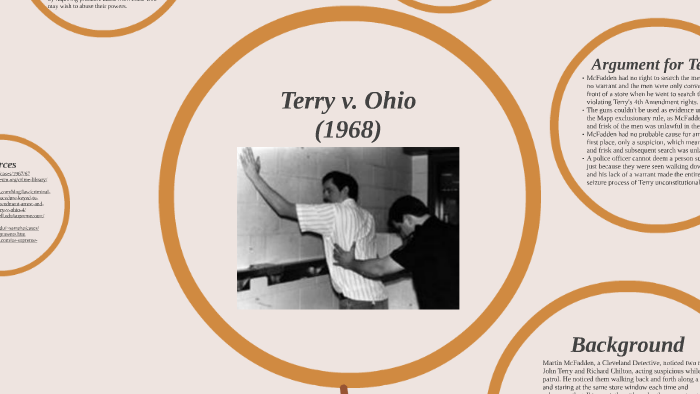 Source: prezi.com
2d 122 214 N. The officer approached the Petitioner for questioning and decided to search him first. June 10 1968 Brief Fact Summary. He filed a motion to suppress which the trial court denied. A Cleveland detective McFadden on a downtown beat which he had been patrolling for many years observed two strangers petitioner and another man Chilton on a street corner.
 Source: youtube.com
929 1967 to determine whether the admission of the revolvers in evidence violated petitioners rights under the Fourth Amendment made applicable to the States by the. The officer suspected the men were planning to rob the store. Terry and two other men were seen a plain clothes police officer in what. The Court held that the limited search that occurred in this case was an unconstitutional violation of the Fourth Amendment right to privacy because the stop was conducted with reasonable suspicion that the suspect was. Terry the Petitioner was stopped and searched by an officer after the officer observed the Petitioner seemingly casing a store for a potential robbery.
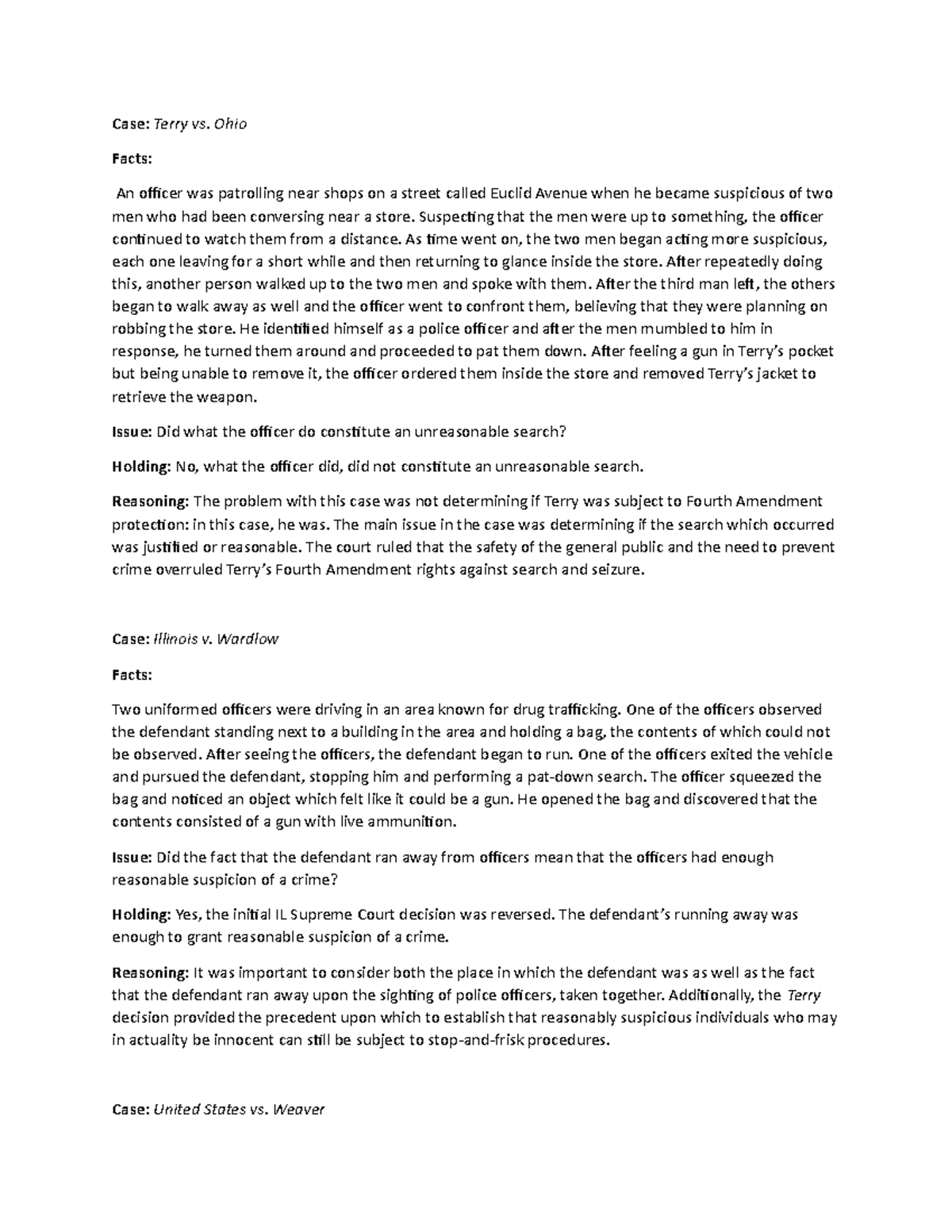 Source: studocu.com
As defined by Merriam-Webster these rights are deemed to be impossible to take away or give up. 2d 889 1968 US. The two were observed proceeding alternately back and forth along a similar path in which they stared at the same. The officer approached the Petitioner for questioning and decided to search him first. Summary The Terry case was a complex one involving questions of whether the officer had a reasonable cause to act whether a pat down constituted an illegal search and whether.
 Source: slideserve.com
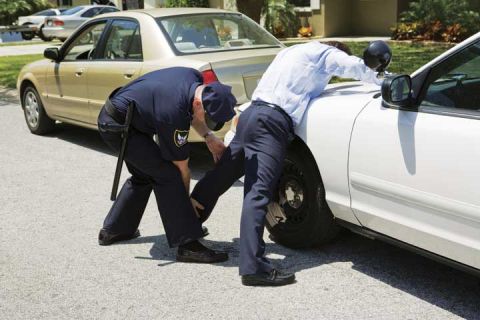
2d 889 1968 US. In 2009 the Supreme Court cited Terry v. Stop-and-frisk had always been a police practice but validation from the Supreme Court meant that the practice became more widely accepted. The case dealt with the stop and frisk practice of police officers and whether or not it violates the US. Decided June 10 1968.
 Source: engagedscholarship.csuohio.edu
Ohio Say you are a newly hired police recruit and eager to do a good job. Supreme Court in 1967. Supreme Court decision issued on June 10 1968 which held that stop-and-frisk searches conducted without probable cause do not necessarily violate the prohibition of unreasonable searches and seizures under the Fourth Amendment to the US. The incident took place on 31 st October 1963 Harris 2012. Ohio As American citizens we are entitled to certain unalienable rights.
 Source: engagedscholarship.csuohio.edu
Constitutions Fourth Amendment protection from unreasonable searches and seizures. Chilton on a street corner. Jun 10 1968 Facts of the case Terry and two other men were observed by a plain clothes policeman in what the officer believed to be casing a job a stick-up The officer stopped and frisked the three men and found weapons on two of them. We granted certiorari 387 US. He filed a motion to suppress which the trial court denied.
 Source: crimemuseum.org
Supreme Court in 1967. He filed a motion to suppress which the trial court denied. The Petitioner John W. Chilton on a street corner. Terry and two other men were seen a plain clothes police officer in what.
 Source: testmaxprep.com
Following his usual patrol on a downbeat for several years a Cleveland detective saw two strangers ie. George Baptiste was charged with unlawful possession of a firearm by a convicted felon. The Petitioner John W. Ohio Three men including Terry defendant were approached by an officer who had observed their alleged suspicious behavior. 929 1967 to determine whether the admission of the revolvers in evidence violated petitioners rights under the Fourth Amendment made applicable to the States by the.
 Source: slideplayer.com
2d 122 214 N. Summary of case case. The Petitioner John W. The officer approached the Petitioner for questioning and decided to search him first. 1 1968 Terry v.
 Source: slideplayer.com
LEXIS 1345 44 Ohio Op. SUPREME COURT OF THE UNITED STATES. The Petitioner John W. Case Summary of Terry v. 2d 122 214 N.
Source: youtube.com
Terry and two other men were seen a plain clothes police officer in what. Decided June 10 1968. Ohio represents a clash between Fourth Amendment protection from intrusive harassing conduct by police when no crime has been committed and the duty of an officer to investigate suspicious behavior and prevent crime. He saw them proceed alternately back and forth along an identical route. After the officer inquired into what they were doing the men responded by mumbling.
 Source: slideplayer.com
The officer approached the Petitioner for questioning and decided to search him first. Ohio was a landmark case because the Supreme Court ruled that officers could conduct investigatory searches for weapons based on reasonable suspicions. The Petitioner John W. We granted certiorari 387 US. Synopsis of Rule of Law.
 Source: slideplayer.com
CERTIORARI TO THE SUPREME COURT OF. The petitioner and Mr. Following his usual patrol on a downbeat for several years a Cleveland detective saw two strangers ie. Terry and two other men were seen a plain clothes police officer in what. Get more case briefs explained with Quimbee.
This site is an open community for users to share their favorite wallpapers on the internet, all images or pictures in this website are for personal wallpaper use only, it is stricly prohibited to use this wallpaper for commercial purposes, if you are the author and find this image is shared without your permission, please kindly raise a DMCA report to Us.
If you find this site helpful, please support us by sharing this posts to your favorite social media accounts like Facebook, Instagram and so on or you can also bookmark this blog page with the title terry vs ohio summary by using Ctrl + D for devices a laptop with a Windows operating system or Command + D for laptops with an Apple operating system. If you use a smartphone, you can also use the drawer menu of the browser you are using. Whether it’s a Windows, Mac, iOS or Android operating system, you will still be able to bookmark this website.


