Your Russian spring summer encephalitis images are available in this site. Russian spring summer encephalitis are a topic that is being searched for and liked by netizens now. You can Get the Russian spring summer encephalitis files here. Get all free photos.
If you’re searching for russian spring summer encephalitis pictures information linked to the russian spring summer encephalitis keyword, you have come to the ideal site. Our site frequently provides you with hints for downloading the highest quality video and picture content, please kindly surf and locate more informative video content and graphics that fit your interests.
Russian Spring Summer Encephalitis. In 1954 sera from 217 persons admitted to hospital in Graz Austria with a diagnosis of meningo-encephalitis poliomyelitis or similar complaints were examined for the presence of complement-fixing antibody to the virus of Russian spring-summer encephalitis type previously isolated in Styria this Bulletin 1955 v. Nonfatal infections in laboratory workers with the virus of louping ill have. 30 953 and the results of the investigation indicated that 123 had. Far Eastern subtype formerly Russian Spring Summer encephalitis virus RSSEV.
 Lyme Disease Information Poster Zazzle Com Lyme Disease Awareness Lyme Lyme Disease From pinterest.com
It is a complex of. Tick-borne Encephalitis is a viral infection caused by one of three tick-borne encephalitis virus TBEV subtypes belonging to the Flaviviridae family. Other Information DOC Permit Required Antigenic Group B. Definition of Russian spring-summer encephalitis in the Medical Dictionary by The Free Dictionary. Epilepsia partialis continua in tick-borne Russian spring-summer encephalitis Acta Neurol Scand. RSSE The Russian spring-summer encephalitis which is caused by the RSSE virus Flavivirus group B has a mortality rate of up to 2530.
The Russian spring-summer encephalitis which is caused by the RSSE virus Flavivirus group B has a mortality rate of up to 2530.
As member of the Flaviviridae family KFDV belongs to the Russian spring summer encephalitis virus group245. Central European Siberian and Far Eastern formerly known as Russian Spring-Summer Encephalitis. TBE is caused by the tick-borne encephalitis virus TBEV a member of the family Flaviviridae and was initially isolated in 1937. Unlike Rasmussen encephalitis EPC with TBRSSE does not progress even in the long term. Many translated example sentences containing Russian spring-summer encephalitis Spanish-English dictionary and search engine for Spanish translations. Far Eastern subtype formerly Russian Spring Summer encephalitis virus RSSEV.
 Source: iamat.org
Tick-borne encephalitis virus Russian Spring-Summer Encephalitis virus mouse brain 6 days post-infection showing typical flavivirus infection characteristics including multivesiculation in cytoplasm and presence of virions within lumina of endoplasmic reticulum. The first one desig- These investigations were aided through the Commission on Neurotropic Virus Diseases Board for the Investigation and Control of Influenza and Other Epidemic Diseases in the Army Preventive Medicine. Russian Spring Summer Encephalitis. The reference strain is the Sofjin strain. Other Information DOC Permit Required Antigenic Group B.
 Source: iswtbe.com
Its viral agent is very closely related to and possibly identical with that of louping ill of sheep long recognized in Scotland. And in a few countries of Eastern Europe. Louis-Japanese B en-cephalitis group on the basis of reactions in laboratory animals. It is a complex of. 581582 1956 Cite.
 Source: researchgate.net
It is transmitted to humans through the bite of infected Ixodes ticks. 581582 1956 Cite. Louis-Japanese B en-cephalitis group on the basis of reactions in laboratory animals. It is transmitted to humans through the bite of infected Ixodes ticks. Epub 2011 Jul 19.
 Source: sciencedirect.com
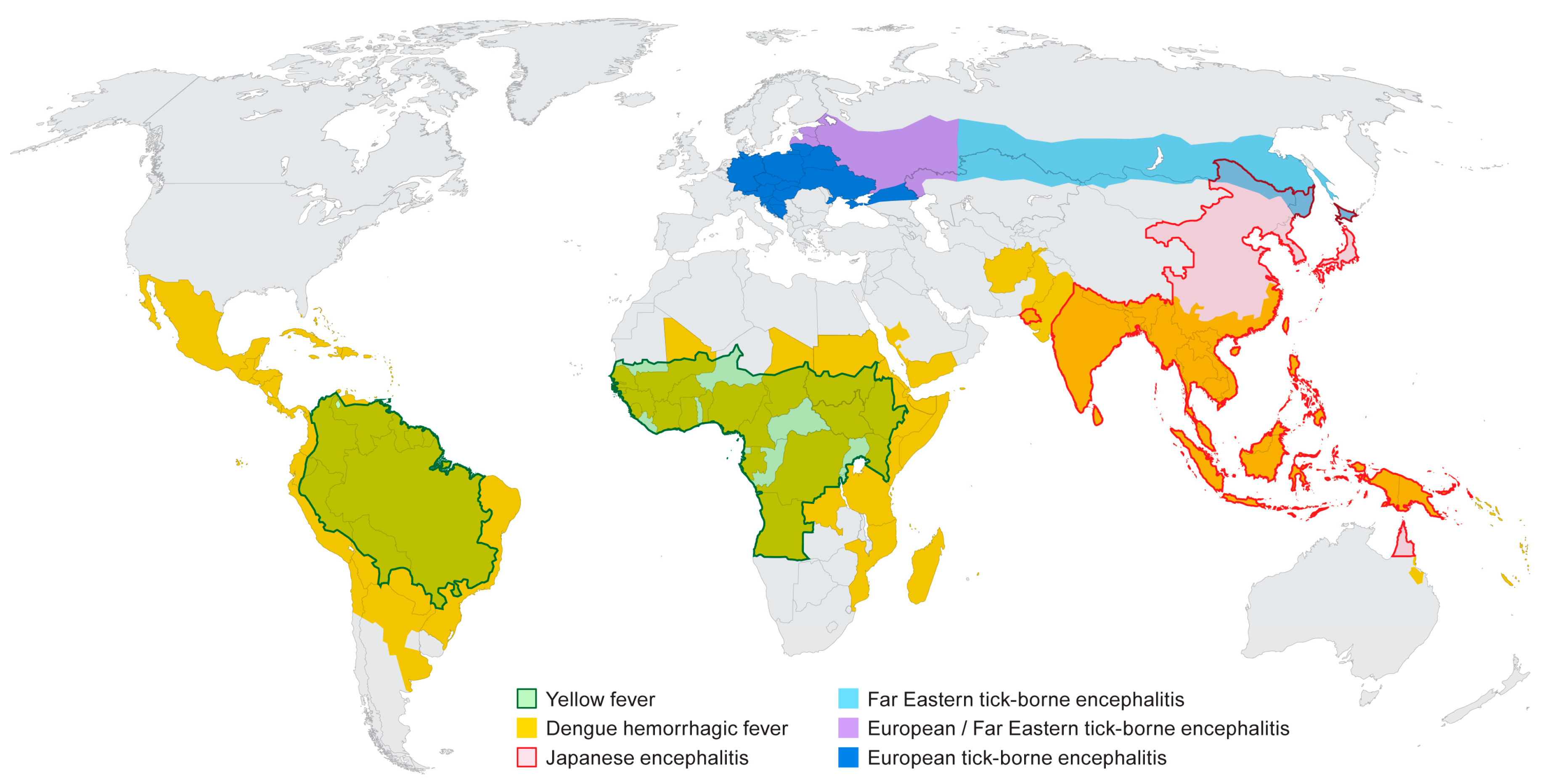
European or Western tick-borne encephalitis virus Siberian tick-borne encephalitis virus and Far eastern Tick-borne encephalitis virus formerly known as Russian Spring Summer encephalitis virus RSSEV. The Russian spring-summer encephalitis and louping ill group of viruses. Muscular weakness numbness and elevated body temperature persisting for several days usually appear in Russian spring-summer encephalitis ten to 12 days after the bite of an infected tick in a natural focus of the disease. Relationship of European and Asiatic strains of Russian spring-summer encephalitis viruses and louping ill virus. Section V - Antigenic Relationship and Lack of Relationship to Other Viruses.
 Source: travelhealthpro.org.uk
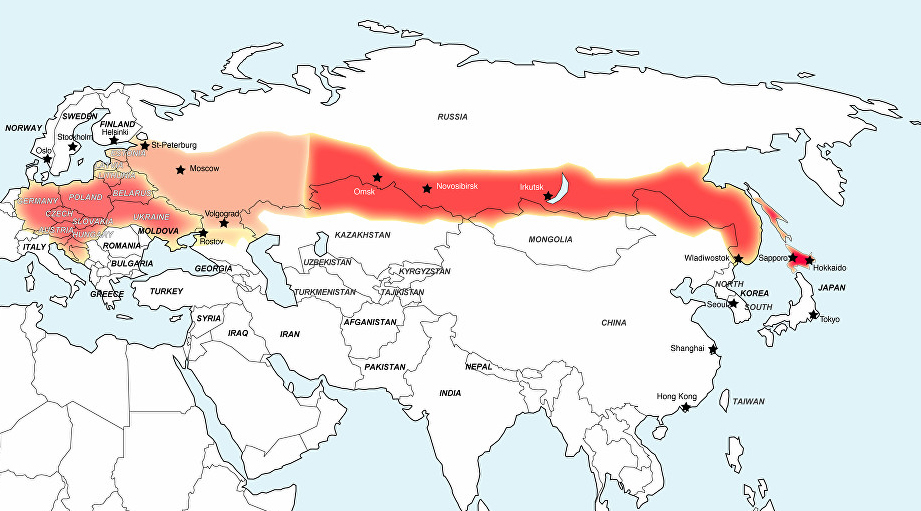
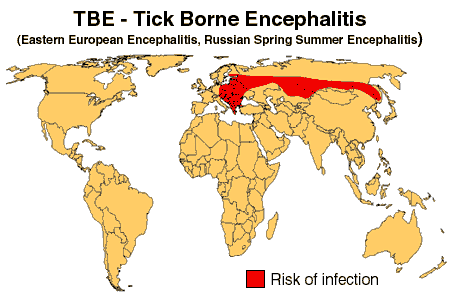
Far Eastern subtype formerly Russian Spring Summer encephalitis virus RSSEV. Three virus sub-types are described. The Russian spring-summer encephalitis which is caused by the RSSE virus Flavivirus group B has a mortality rate of up to 2530. It is a complex of viruses with a wide geographical range from East Germany to Siberia and the Soviet Far East and possibly into North China. Translations in context of Russian spring summer encephalitis in English-French from Reverso Context.
 Source: link.springer.com
The TBEV genome. Relationship of European and Asiatic strains of Russian spring-summer encephalitis viruses and louping ill virus. Russian Spring Summer Encephalitis. Three virus sub-types are described. Unlike Rasmussen encephalitis EPC with TBRSSE does not progress even in the long term.
 Source: regentstreetclinic.co.uk
It is a complex of. TBE is caused by the tick-borne encephalitis virus TBEV a member of the family Flaviviridae and was initially isolated in 1937. Russian spring-summer virus encephalitis has been recognized in man in parts of the European and Far Eastern U. Other Information DOC Permit Required Antigenic Group B. Definition of Russian spring-summer encephalitis in the Medical Dictionary by The Free Dictionary.
 Source: msrblog.com
The meaning of RUSSIAN SPRING-SUMMER ENCEPHALITIS is a tick-borne encephalitis of Europe and Asia caused by a strain Far Eastern subtype of the tick-borne encephalitis virus and transmitted by ticks of the genus Ixodes. European or Western tick-borne encephalitis virus Siberian tick-borne encephalitis virus and Far eastern Tick-borne encephalitis virus formerly known as Russian Spring Summer encephalitis virus RSSEV. As member of the Flaviviridae family KFDV belongs to the Russian spring summer encephalitis virus group245. American Heritage Dictionary of. The meaning of RUSSIAN SPRING-SUMMER ENCEPHALITIS is a tick-borne encephalitis of Europe and Asia caused by a strain Far Eastern subtype of the tick-borne encephalitis virus and transmitted by ticks of the genus Ixodes.
 Source: sciencedirect.com
RSSE The Russian spring-summer encephalitis which is caused by the RSSE virus Flavivirus group B has a mortality rate of up to 2530. The course of the. SALS Basis Results of SALS surveys and information from the Catalogue. A Virus Resembling Russian SpringSummer Encephalitis Virus from an Ixodid Tick in Malaya. Epub 2011 Jul 19.
 Source:
Other Information DOC Permit Required Antigenic Group B. Tick-borne encephalitis TBE is an acute viral illness caused by two closely related viruses of the family Flaviviridae. Epilepsia partialis continua in tick-borne Russian spring-summer encephalitis Acta Neurol Scand. Define Russian spring-summer encephalitis. Definition of Russian spring-summer encephalitis in the Medical Dictionary by The Free Dictionary.
 Source: pinterest.com
Section V - Antigenic Relationship and Lack of Relationship to Other Viruses. The central European encephalitis CEE virus found in many European countries and the Russian spring-summer encephalitis RSSE virus found predominantly in the Asian parts of the former Soviet Union. It appears as disabling but not fatal condition with a time course where three phases can be di. Definition of Russian spring-summer encephalitis in the Medical Dictionary by The Free Dictionary. TBEV is a positive-sense single-stranded RNA virus contained in a 40-60 nm spherical enveloped capsid.
 Source: semanticscholar.org
Relationship of European and Asiatic strains of Russian spring-summer encephalitis viruses and louping ill virus. SALS Basis Results of SALS surveys and information from the Catalogue. Translations in context of Russian spring summer encephalitis in English-French from Reverso Context. RSSE The Russian spring-summer encephalitis which is caused by the RSSE virus Flavivirus group B has a mortality rate of up to 2530. The Russian spring-summer encephalitis which is caused by the RSSE virus Flavivirus group B has a mortality rate of up to 2530.
 Source: pinterest.com
The course of the. It is a complex of. Epub 2011 Jul 19. The Russian spring-summer encephalitis and louping ill group of viruses. Three virus sub-types are described.
 Source: sciencedirect.com
Russian Spring-Summer Encephalitis–Three strains of Russian spring- summer encephalitis virus have been studied in this laboratory. Tick-borne encephalitis TBE is an acute viral illness caused by two closely related viruses of the family Flaviviridae. A Virus Resembling Russian SpringSummer Encephalitis Virus from an Ixodid Tick in Malaya. Its viral agent is very closely related to and possibly identical with that of louping ill of sheep long recognized in Scotland. Russian Spring Summer Encephalitis.
Source: pinterest.com
Muscular weakness numbness and elevated body temperature persisting for several days usually appear in Russian spring-summer encephalitis ten to 12 days after the bite of an infected tick in a natural focus of the disease. Louis-Japanese B en-cephalitis group on the basis of reactions in laboratory animals. Far Eastern subtype formerly Russian Spring Summer encephalitis virus RSSEV. The Russian spring-summer encephalitis which is caused by the RSSE virus Flavivirus group B has a mortality rate of up to 2530. American Heritage Dictionary of.
 Source: mdpi.com
It is a complex of viruses with a wide geographical range from East Germany to Siberia and the Soviet Far East and possibly into North China. Tick-borne encephalitis virus Russian Spring-Summer Encephalitis virus mouse brain 6 days post-infection showing typical flavivirus infection characteristics including multivesiculation in cytoplasm and presence of virions within lumina of endoplasmic reticulum. Inflammation of the brain. CLOSE RELATION BETWEEN RUSSIAN SPRING-SUMMER ENCEPHALITIS AND LOUPING-ILL VIRUSES1 IN 1938 Russian scientists isolated and described a virus obtained from the brain tissue of fatal cases of encephalitis occurring in Russian woodsmen2 They placed their virus in the St. Unlike Rasmussen encephalitis EPC with TBRSSE does not progress even in the long term.
 Source: teamronin.net
CLOSE RELATION BETWEEN RUSSIAN SPRING-SUMMER ENCEPHALITIS AND LOUPING-ILL VIRUSES1 IN 1938 Russian scientists isolated and described a virus obtained from the brain tissue of fatal cases of encephalitis occurring in Russian woodsmen2 They placed their virus in the St. Epub 2011 Jul 19. A Virus Resembling Russian SpringSummer Encephalitis Virus from an Ixodid Tick in Malaya. It is a complex of. The central European encephalitis CEE virus found in many European countries and the Russian spring-summer encephalitis RSSE virus found predominantly in the Asian parts of the former Soviet Union.
 Source: nccid.ca
Tick-borne encephalitis virus Russian Spring-Summer Encephalitis virus mouse brain 6 days post-infection showing typical flavivirus infection characteristics including multivesiculation in cytoplasm and presence of virions within lumina of endoplasmic reticulum. Russian spring-summer encephalitis synonyms Russian spring-summer encephalitis pronunciation Russian spring-summer encephalitis translation English dictionary definition of Russian spring-summer encephalitis. Tick-borne Encephalitis is a viral infection caused by one of three tick-borne encephalitis virus TBEV subtypes belonging to the Flaviviridae family. European or Western tick-borne encephalitis virus Siberian tick-borne encephalitis virus and Far eastern Tick-borne encephalitis virus formerly known as Russian Spring Summer encephalitis virus RSSEV. The course of the.
This site is an open community for users to submit their favorite wallpapers on the internet, all images or pictures in this website are for personal wallpaper use only, it is stricly prohibited to use this wallpaper for commercial purposes, if you are the author and find this image is shared without your permission, please kindly raise a DMCA report to Us.
If you find this site beneficial, please support us by sharing this posts to your own social media accounts like Facebook, Instagram and so on or you can also bookmark this blog page with the title russian spring summer encephalitis by using Ctrl + D for devices a laptop with a Windows operating system or Command + D for laptops with an Apple operating system. If you use a smartphone, you can also use the drawer menu of the browser you are using. Whether it’s a Windows, Mac, iOS or Android operating system, you will still be able to bookmark this website.


