Your Nietzsche on the genealogy of morality summary images are ready in this website. Nietzsche on the genealogy of morality summary are a topic that is being searched for and liked by netizens today. You can Find and Download the Nietzsche on the genealogy of morality summary files here. Find and Download all free vectors.
If you’re looking for nietzsche on the genealogy of morality summary pictures information connected with to the nietzsche on the genealogy of morality summary topic, you have visit the ideal site. Our site frequently provides you with hints for viewing the maximum quality video and image content, please kindly search and locate more enlightening video articles and graphics that fit your interests.
Nietzsche On The Genealogy Of Morality Summary. The second question however has proved much more difficult to answer. Oppressed people resent their oppressors so they revolt and develop a new moral code that depicts their own own humble patient and obedient behavior as good and demonizes people they hate their oppressors as barbaric aggressive beasts of prey. This manifests itself in a forgetfulness that prevents the remembrance of natural intuition. Nietzsche begins by retrieving his discussion of English psychologists in the Preface.
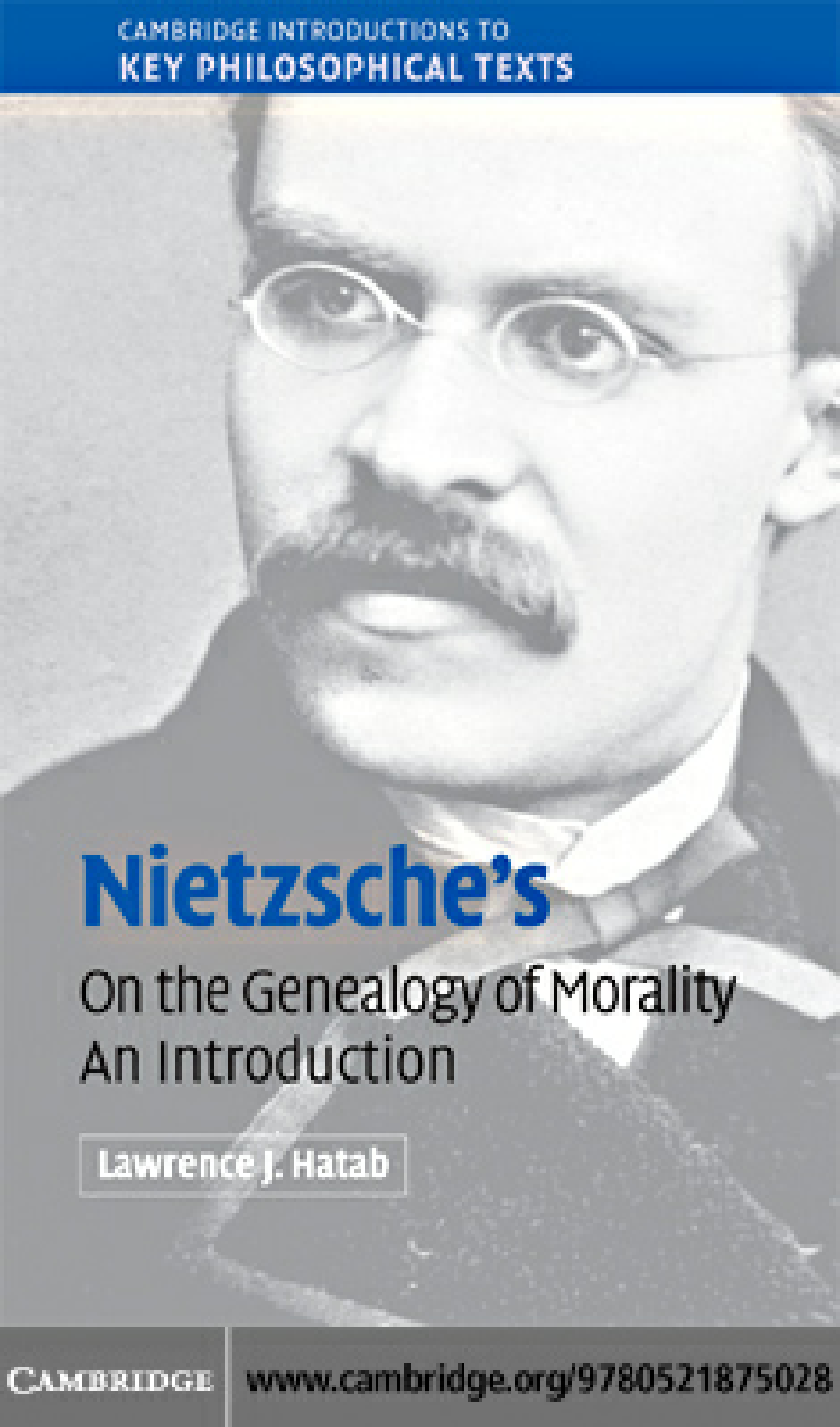 Pdf Nietzsche S On The Genealogy Of Morality An Introduction From researchgate.net
He praises some of their qualities especially their suspicious stance toward Christianity Platonism and moral idealism as well as their courage in confronting undesirable truths about morality 1. Nietzsche sums up the idea well in the preface to On the Genealogy of Morality hereafter simply Genealogy or GM. Trace your genealogy online. An early concept of goodness was established yet it was later transformed into an effect of habit. He hopes they are brave men willing to sacrifice all desirability to truth. Nietzsches quest into the origin of morality began with his critique of the English psychologists traditional genealogy.
We are enamored with things we can learn intellectually but we dont pay much attention to our lived experiences.
We are enamored with things we can learn intellectually but we dont pay much attention to our lived experiences. Summary On the Genealogy of Morals. Billions of Records Discover Your Genealogy. On the Genealogy of Morals Friedrich Nietzsche 1887 Prologue 1 We dont know ourselves we knowledgeable people we are personally ignorant about ourselves. Our thoughts values every yes no if and but grow from us with the same inevitability as fruits borne on the tree all related and each with an affinity to each and evidence of one will one health one earth one sun GM P2. Oppressed people resent their oppressors so they revolt and develop a new moral code that depicts their own own humble patient and obedient behavior as good and demonizes people they hate their oppressors as barbaric aggressive beasts of prey.
 Source: pinterest.com
Genealogy of Morals Summary Nietzsche opens by expressing dissatisfaction with the English psychologists who have tried to explain the origin of morality. Michel Foucault and Judith Butler among others cite Nietzsche as an influence specifically because of the. Nietzsche thinks that priestly morality evolves from historically oppressed people around the birth of Christianity. Zur Genealogie der Moral. In Section 1 Nietzsche sarcastically notes that English psychologists are the only ones who have attempted to arrive at a history of the origin of morality but they are more interesting than their books.
 Source: sk.pinterest.com
Preface Summary Analysis Next Good and Evil Good and Bad Themes and Colors Key Summary Analysis 1. He praises some of their qualities especially their suspicious stance toward Christianity Platonism and moral idealism as well as their courage in confronting undesirable truths about morality 1. Weve never tried to find out who we are how could it happen that one day weddiscoverourselves. It is created by hatred priests who are envying of Nobles power and strength and horrified of pain struggle and restlessness. Nietzsches quest into the origin of morality began with his critique of the English psychologists traditional genealogy.
 Source: kevinbinz.com
We are enamored with things we can learn intellectually but we dont pay much attention to our lived experiences. He praises some of their qualities especially their suspicious stance toward Christianity Platonism and moral idealism as well as their courage in confronting undesirable truths about morality 1. It is created by hatred priests who are envying of Nobles power and strength and horrified of pain struggle and restlessness. In this account people discovered satisfaction in selfless acts and those that benefited from those actions defined them as good. Preface Summary Analysis Next Good and Evil Good and Bad Themes and Colors Key Summary Analysis 1.
 Source:
The second question however has proved much more difficult to answer. Summary Summary On The Genealogy of Morals is made up of three essays all of which question and critique the value of our moral judgments based on a genealogical method whereby Nietzsche examines the origins and meanings of our different moral concepts. This manifests itself in a forgetfulness that prevents the remembrance of natural intuition. An early concept of goodness was established yet it was later transformed into an effect of habit. On the Genealogy of Morals Friedrich Nietzsche 1887 Prologue 1 We dont know ourselves we knowledgeable people we are personally ignorant about ourselves.
 Source: yumpu.com
They claim to be historians of morality but they completely lack a historical spirit. In his On the Genealogy of Morality Nietzsche presents a potent challenge to morality by saying that Morality is one kind of ethical system that promoting narcosis calm and passive. Preface Summary Analysis Next Good and Evil Good and Bad Themes and Colors Key Summary Analysis 1. Billions of Records Discover Your Genealogy. This manifests itself in a forgetfulness that prevents the remembrance of natural intuition.
 Source: cambridge.org
Nietzsche sums up the idea well in the preface to On the Genealogy of Morality hereafter simply Genealogy or GM. There develops here an imposable moral sense. In this account people discovered satisfaction in selfless acts and those that benefited from those actions defined them as good. In Human which is Nietzsches first attempt at a genealogy of Christian morality it is called historical philosophy see p. It is created by hatred priests who are envying of Nobles power and strength and horrified of pain struggle and restlessness.
 Source: audible.com
He praises some of their qualities especially their suspicious stance toward Christianity Platonism and moral idealism as well as their courage in confronting undesirable truths about morality 1. He hopes they are brave men willing to sacrifice all desirability to truth. Nietzsche begins by saying we dont really know ourselves. It is created by hatred priests who are envying of Nobles power and strength and horrified of pain struggle and restlessness. Nietzsche views humans as repressed by guilt.
Source:
He speculates that such men microscopists of the soul may have good intentions. Summary Summary On The Genealogy of Morals is made up of three essays all of which question and critique the value of our moral judgments based on a genealogical method whereby Nietzsche examines the origins and meanings of our different moral concepts. And theres good reason for that. We are enamored with things we can learn intellectually but we dont pay much attention to our lived experiences. There develops here an imposable moral sense.
 Source: cambridge.org
On the Genealogy of Morality In the attempt to prevent future generations from succumbing to this all engulfing levelling effect Nietzsche spent much time in his writings performing a revaluation of values hoping to lessen the effect of herd morality on the development of higher men. And theres good reason for that. In Human which is Nietzsches first attempt at a genealogy of Christian morality it is called historical philosophy see p. Michel Foucault and Judith Butler among others cite Nietzsche as an influence specifically because of the. In his On the Genealogy of Morality Nietzsche presents a potent challenge to morality by saying that Morality is one kind of ethical system that promoting narcosis calm and passive.
 Source: yumpu.com
Nietzsche begins by saying we dont really know ourselves. In his On the Genealogy of Morality Nietzsche presents a potent challenge to morality by saying that Morality is one kind of ethical system that promoting narcosis calm and passive. A polemical contribution to moral and political theory it offers a critique of moral values and traces the historical evolution of concepts such as guilt conscience. Oppressed people resent their oppressors so they revolt and develop a new moral code that depicts their own own humble patient and obedient behavior as good and demonizes people they hate their oppressors as barbaric aggressive beasts of prey. It is an investigation into the origins of in the Genealogy itself our morality.
 Source: slideplayer.com
Nietzsche begins by retrieving his discussion of English psychologists in the Preface. In this account people discovered satisfaction in selfless acts and those that benefited from those actions defined them as good. He praises some of their qualities especially their suspicious stance toward Christianity Platonism and moral idealism as well as their courage in confronting undesirable truths about morality 1. There develops here an imposable moral sense. In Section 1 Nietzsche sarcastically notes that English psychologists are the only ones who have attempted to arrive at a history of the origin of morality but they are more interesting than their books.
 Source: theculturetrip.com
Since our world has debt systems it seems that sometimes humans. Preface Summary Analysis Next Good and Evil Good and Bad Themes and Colors Key Summary Analysis 1. Oppressed people resent their oppressors so they revolt and develop a new moral code that depicts their own own humble patient and obedient behavior as good and demonizes people they hate their oppressors as barbaric aggressive beasts of prey. We are enamored with things we can learn intellectually but we dont pay much attention to our lived experiences. On the Genealogy of Morals Friedrich Nietzsche 1887 Prologue 1 We dont know ourselves we knowledgeable people we are personally ignorant about ourselves.
Source: researchgate.net
The second question however has proved much more difficult to answer. He praises some of their qualities especially their suspicious stance toward Christianity Platonism and moral idealism as well as their courage in confronting undesirable truths about morality 1. He hopes they are brave men willing to sacrifice all desirability to truth. Nietzsche On The Genealogy Of Morality Summary. The assessment from those belonging to what Nietzsche derisively terms the herd has long held that those in bondage to the more powerful are in firm grasp of the moral high ground over those dominant potentates but the philosopher expresses fervent disagreement with this view and the basis of that disagreement forms the foundation On the Genealogy of Morals.
Source: degruyter.com
Well known as one of Nietzsches greatest works and as one of the most important books of nineteenth-century philosophy On the Genealogy of Morality also provided the inspiration for the methodologies of several key philosophers of the modern age. This manifests itself in a forgetfulness that prevents the remembrance of natural intuition. An early concept of goodness was established yet it was later transformed into an effect of habit. Stanford Libraries official online search tool for books media journals databases government documents and more. Preface Summary Analysis Next Good and Evil Good and Bad Themes and Colors Key Summary Analysis 1.
 Source: ar.pinterest.com
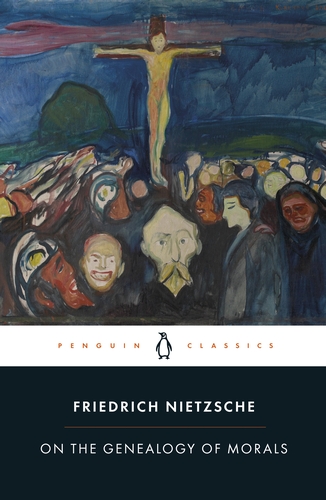
He hopes they are brave men willing to sacrifice all desirability to truth. Weve never tried to find out who we are how could it happen that one day weddiscoverourselves. Trace your genealogy online. Preface Summary Analysis Next Good and Evil Good and Bad Themes and Colors Key Summary Analysis 1. Eine Streitschrift is an 1887 book by German philosopher Friedrich NietzscheIt consists of a preface and three interrelated treatises Abhandlungen in German that expand and follow through on concepts Nietzsche sketched out in Beyond Good and Evil 1886.
 Source: youtube.com
We are enamored with things we can learn intellectually but we dont pay much attention to our lived experiences. Genealogy of Morals Summary Nietzsche opens by expressing dissatisfaction with the English psychologists who have tried to explain the origin of morality. Summary On the Genealogy of Morals. On the Genealogy of Morals Friedrich Nietzsche 1887 Prologue 1 We dont know ourselves we knowledgeable people we are personally ignorant about ourselves. Friedrich Nietzsche is one of the most influential thinkers of the past 150 years and On the Genealogy of Morality 1887 is his most important work on ethics and politics.
 Source: cambridge.org
Billions of Records Discover Your Genealogy. Is Nietzsche a genealogist. Oppressed people resent their oppressors so they revolt and develop a new moral code that depicts their own own humble patient and obedient behavior as good and demonizes people they hate their oppressors as barbaric aggressive beasts of prey. Trace your genealogy online. Genealogy of Morals Summary Nietzsche opens by expressing dissatisfaction with the English psychologists who have tried to explain the origin of morality.
 Source: penguin.co.uk
The second question however has proved much more difficult to answer. Billions of Records Discover Your Genealogy. Summary On the Genealogy of Morals. Preface Summary Analysis Next Good and Evil Good and Bad Themes and Colors Key Summary Analysis 1. And theres good reason for that.
This site is an open community for users to share their favorite wallpapers on the internet, all images or pictures in this website are for personal wallpaper use only, it is stricly prohibited to use this wallpaper for commercial purposes, if you are the author and find this image is shared without your permission, please kindly raise a DMCA report to Us.
If you find this site adventageous, please support us by sharing this posts to your preference social media accounts like Facebook, Instagram and so on or you can also save this blog page with the title nietzsche on the genealogy of morality summary by using Ctrl + D for devices a laptop with a Windows operating system or Command + D for laptops with an Apple operating system. If you use a smartphone, you can also use the drawer menu of the browser you are using. Whether it’s a Windows, Mac, iOS or Android operating system, you will still be able to bookmark this website.


