Your Baker vs carr summary images are available in this site. Baker vs carr summary are a topic that is being searched for and liked by netizens today. You can Get the Baker vs carr summary files here. Find and Download all free images.
If you’re searching for baker vs carr summary images information related to the baker vs carr summary topic, you have come to the right site. Our website frequently gives you hints for downloading the highest quality video and image content, please kindly search and locate more informative video content and graphics that fit your interests.
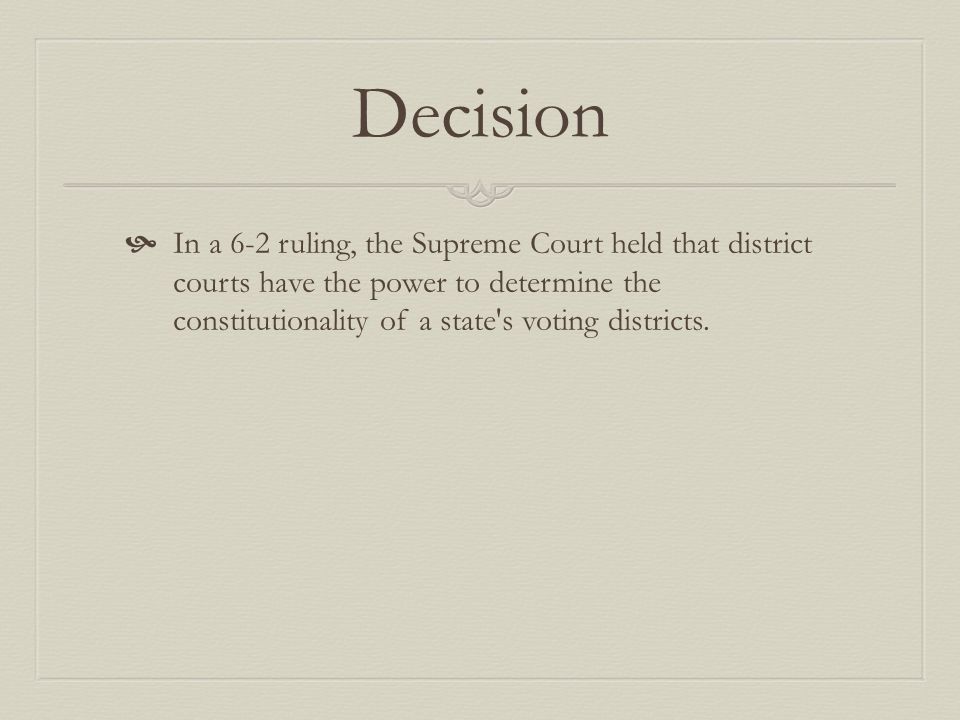
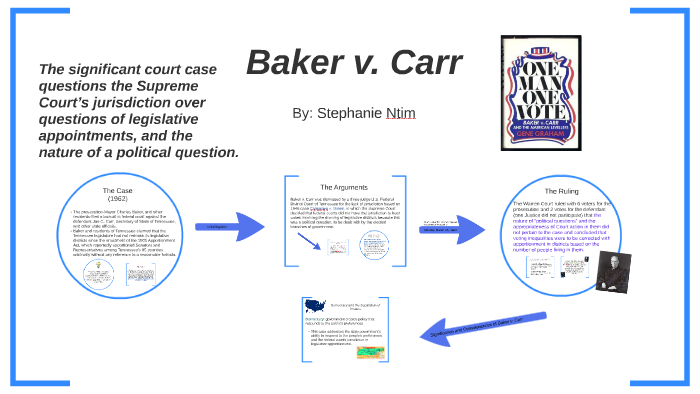
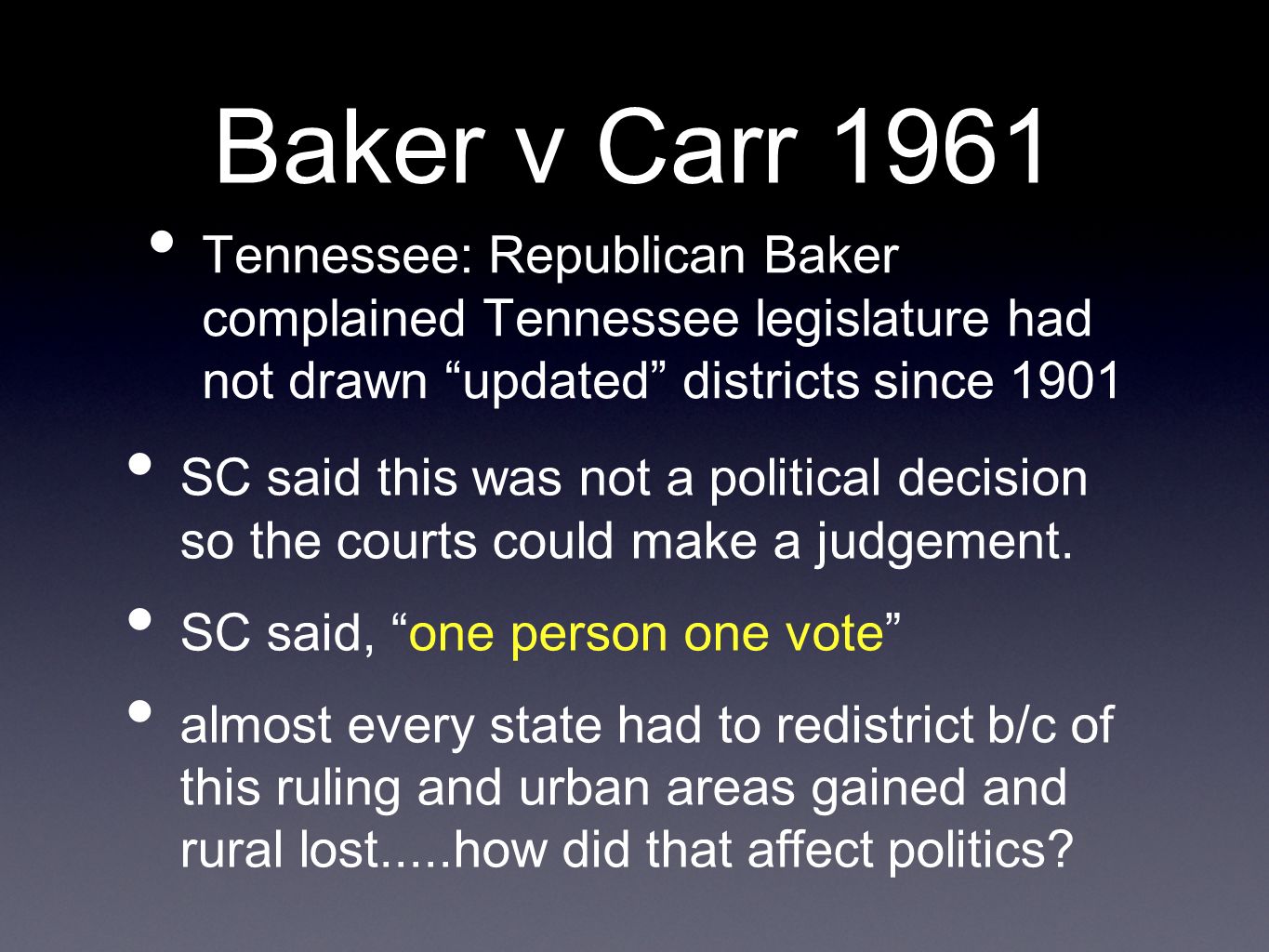
Baker Vs Carr Summary. 186 1962 369 US. The Warren Court reached a 6-2 verdict in favor of Baker. Charles Baker brought suit in 1961 against Joe Carr Tennessees Secretary of State as a representative of the state of Tennessee. Charles Baker a resident of an urban neighborhood in Tennessee filed suit in federal court against Joe Carr then Secretary of State of Tennessee.
 Case Summary From studylib.net
Case Summary From studylib.net
Supreme Court BAKER v. Supreme Court case that forced the Tennessee legislature to reapportion itself on the basis of population. Baker sought a court injunction to postpone elections until the State had fulfilled its duty to reapportion its legislative districts which it had not done since 1901 over 60 years. APPEAL FROM THE UNITED STATES DISTRICT COURT FOR THE MIDDLE DISTRICT OF TENNESSEE. 186 BAKER ET AL. 824 reversed and cause remanded.
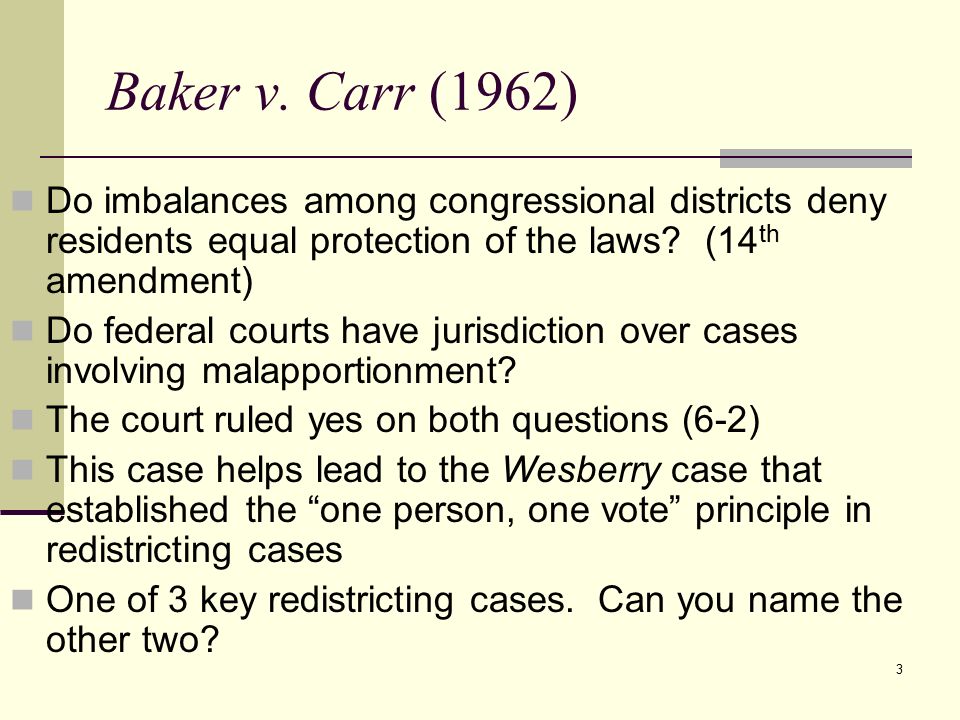
Issue Do federal courts have the power to decide cases about the apportionment of population into state.
Should be allowed to function independently. Set for reargument May 1 1961. 186 BAKER ET AL. The Supreme Court rules that the equal protection challenge in this case is separable from the political questions. Carr decided in 1962 determined wither one vote equaled to another vote background chief justice at time. The District Court dismissed Bakers complaint on the grounds that it lacked authority to decide the case.
 Source: apushcanvas.pbworks.com
Carr Baker said that the law upheld by the Tennessee Constitution regarding the establishment of districts was a violation of the 14th Amendment to the United States Constitution. He claimed that the districts. A lack of political question previous court intervention in apportionment affairs and equal protection under the 14th amendment gave the court enough reason to rule on legislative apportionment. Carr Summary Baker Carr 1962 A Summary Majority The complaint Baker alleged that by means of a 1901 statute of Tennessee apportioning the members of the General Assembly among the states 95 counties these plaintiffs and others similarly situated are denied the equal protection of the laws accorded them by the Fourteenth Amendment. Carr Baker said that the law upheld by the Tennessee Constitution regarding the establishment of districts was a violation of the 14th Amendment to the United States Constitution.
 Source: yasserchemicals.com
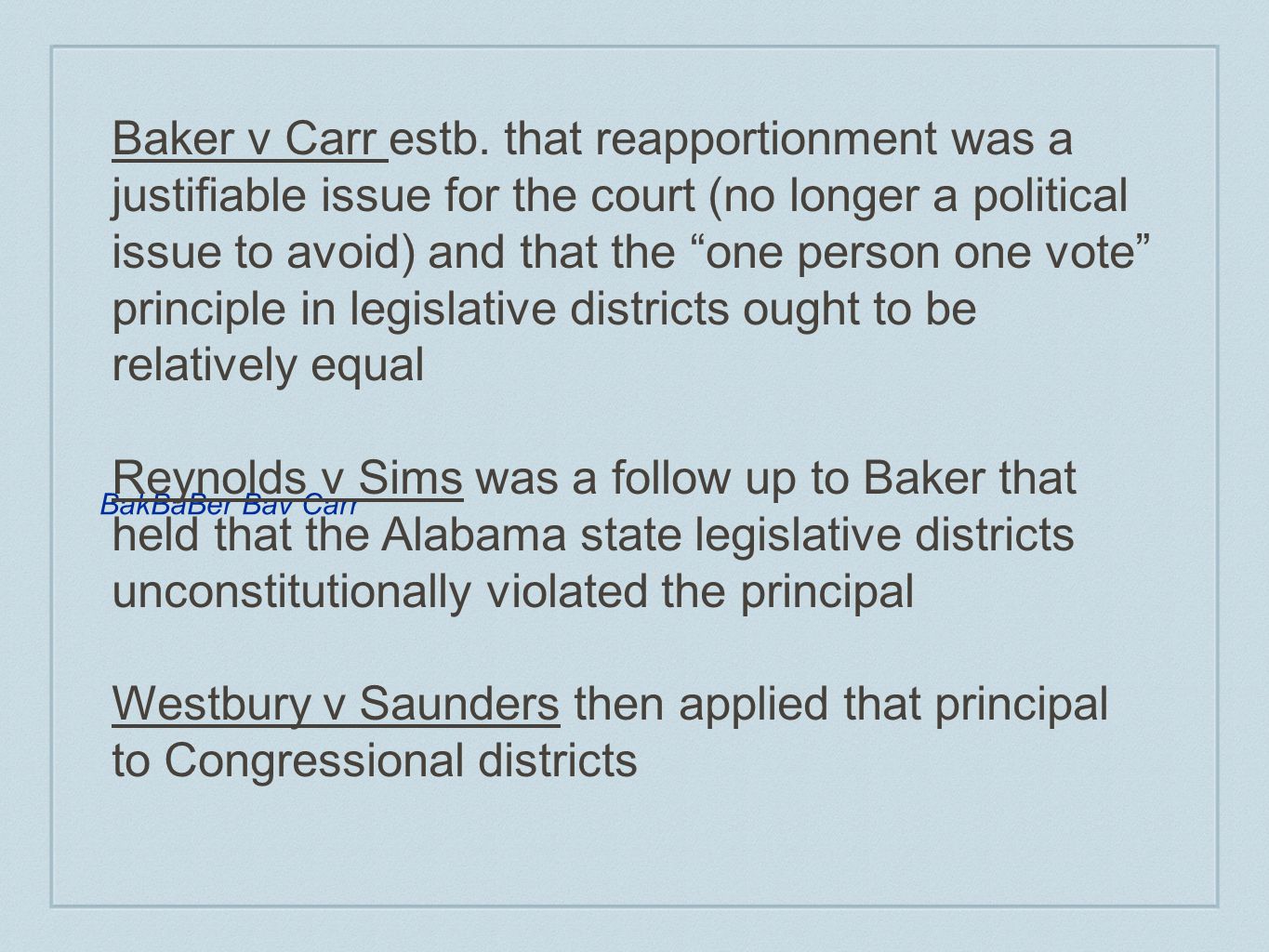
Carr 1962 A Supreme Court case that held that federal courts could hear cases that claimed that malapportionment of state legislatures. Supreme Court BAKER v. Issue Do federal courts have the power to decide cases about the apportionment of population into state. This is a separation of powers issue. From this case forward all states not just TN were required to redistrict during this time period.
 Source: prezi.com
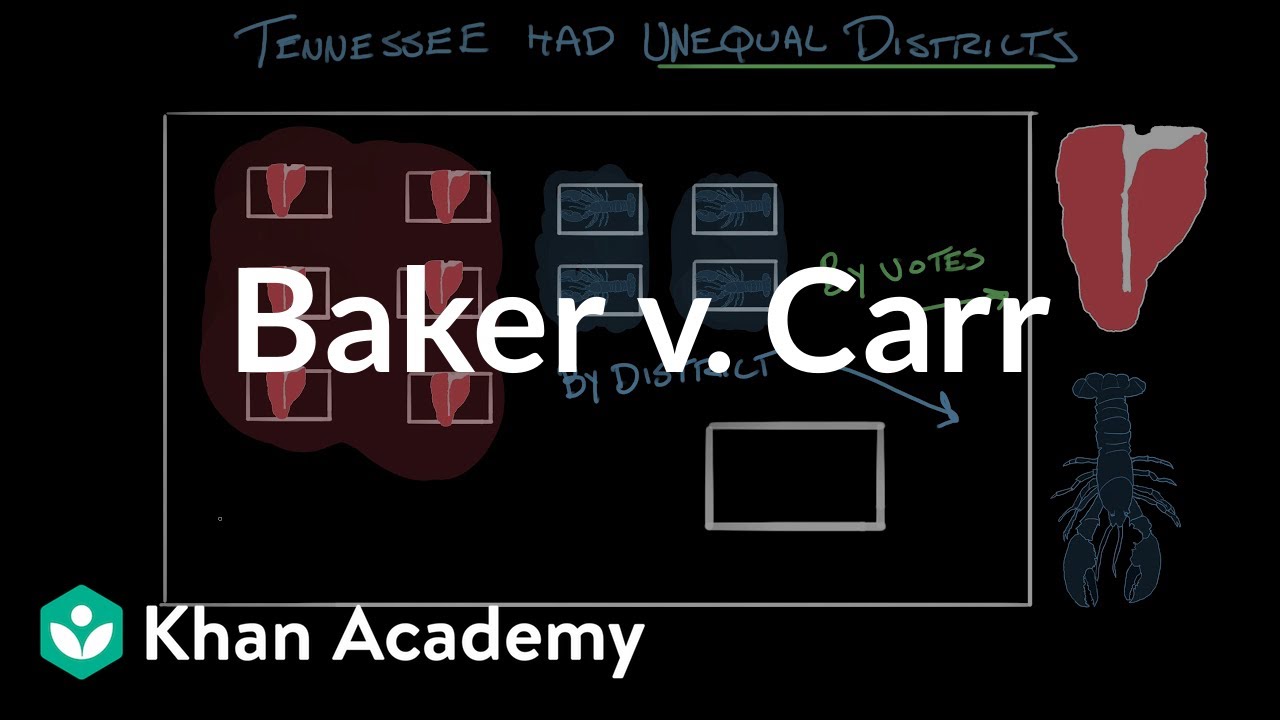
Appellants are persons allegedly. Baker and other Tennessee citizens alleged that a 1901 law designed to apportion the seats for the states General Assembly was virtually ignored. Impact Court gained power to rule on apportionment laws. Argued April 19-20 1961. A Tennessee resident brought suit against the Secretary of State claiming that the failure to redraw the legislative districts every ten years as outlined in the state constitution resulted in rural votes holding more votes than urban votes.
 Source: khanacademy.org
Bakers suit detailed how Tennessees reapportionment efforts ignored significant economic growth and population shifts within the state. CARR 1962 CASE SUMMARY The Tennessee Constitution requires apportionment of both houses of the state legislature on. Decision was 6 to 2. 186 1962 369 US. Decided March 26 1962.
 Source: slideserve.com
From this case forward all states not just TN were required to redistrict during this time period. A lack of political question previous court intervention in apportionment affairs and equal protection under the 14th amendment gave the court enough reason to rule on legislative apportionment. Get more case briefs explained with Quimbee. Carr 1962 page 1 US. APPEAL FROM THE UNITED STATES DISTRICT COURT FOR THE MIDDLE DISTRICT OF TENNESSEE.
 Source: teacherspayteachers.com
186 1962 369 US. Charles Baker a resident of an urban neighborhood in Tennessee filed suit in federal court against Joe Carr then Secretary of State of Tennessee. Supreme Court which agreed to hear his case. CARR 1962 CASE SUMMARY The Tennessee Constitution requires apportionment of both houses of the state legislature on. Traditionally particularly in the South the populations of rural areas had been overrepresented in legislatures in proportion to those of urban and suburban areas.
 Source: youtube.com
APPEAL FROM THE UNITED STATES DISTRICT COURT FOR THE MIDDLE DISTRICT OF TENNESSEE. Charles Baker went up against Joe Carr who was an appointed representative of Tennessee. Baker and other Tennessee citizens alleged that a 1901 law designed to apportion the seats for the states General Assembly was virtually ignored. Set for reargument May 1 1961. In Baker v.
 Source: slideplayer.com
Decided March 26 1962. This is a separation of powers issue. Carr 1962 A Supreme Court case that held that federal courts could hear cases that claimed that malapportionment of state legislatures. CARR 1962 CASE SUMMARY The Tennessee Constitution requires apportionment of both houses of the state legislature on. Should be allowed to function independently.
 Source: newellta.weebly.com
The District Court dismissed Bakers complaint on the grounds that it lacked authority to decide the case. The Warren Court reached a 6-2 verdict in favor of Baker. Impact Court gained power to rule on apportionment laws. Decided March 26 1962. Carr the claim is that the Appellants are being denied equal protection of the laws by being underrepresented in the state legislature.
 Source: slideplayer.com
Baker appealed that decision up to the US. Issue Do federal courts have the power to decide cases about the apportionment of population into state. Decided March 26 1962. Httpsbitly31VBsiO AP World History. Summary The Baker v.
 Source: study.com
Charles Baker went up against Joe Carr who was an appointed representative of Tennessee. Carr In Baker v. A lack of political question previous court intervention in apportionment affairs and equal protection under the 14th amendment gave the court enough reason to rule on legislative apportionment. Carr Summary Baker Carr 1962 A Summary Majority The complaint Baker alleged that by means of a 1901 statute of Tennessee apportioning the members of the General Assembly among the states 95 counties these plaintiffs and others similarly situated are denied the equal protection of the laws accorded them by the Fourteenth Amendment. Decided March 26 1962.
 Source: youtube.com
Carr Summary Baker Carr 1962 A Summary Majority The complaint Baker alleged that by means of a 1901 statute of Tennessee apportioning the members of the General Assembly among the states 95 counties these plaintiffs and others similarly situated are denied the equal protection of the laws accorded them by the Fourteenth Amendment. In Baker v. Issue Do federal courts have the power to decide cases about the apportionment of population into state. Carr Summary Baker Carr 1962 A Summary Majority The complaint Baker alleged that by means of a 1901 statute of Tennessee apportioning the members of the General Assembly among the states 95 counties these plaintiffs and others similarly situated are denied the equal protection of the laws accorded them by the Fourteenth Amendment. The decision remains significant to this day because this case had set history for the political power of urban population areas.
 Source: sites.gsu.edu
Carr 1961 decision allowed judicial oversight of state government in the apportioning of legislative districts. Decided March 26 1962. The decision remains significant to this day because this case had set history for the political power of urban population areas. Barr court case summary baker vs. More from Heimlers HistoryULTIMATE REVIEW PACKETS.
 Source: slideplayer.com
186 BAKER ET AL. Supreme Court case that forced the Tennessee legislature to reapportion itself on the basis of population. Barr court case summary baker vs. Carr 1962 page 1 US. The Supreme Court rules that the equal protection challenge in this case is separable from the political questions.
 Source: study.com
Supreme Court BAKER v. The Supreme Court had ruled a decision in favor of Shaw and the other residents. Issue Do federal courts have the power to decide cases about the apportionment of population into state. Charles Baker a resident of an urban neighborhood in Tennessee filed suit in federal court against Joe Carr then Secretary of State of Tennessee. Baker sought a court injunction to postpone elections until the State had fulfilled its duty to reapportion its legislative districts which it had not done since 1901 over 60 years.
 Source: coursehero.com
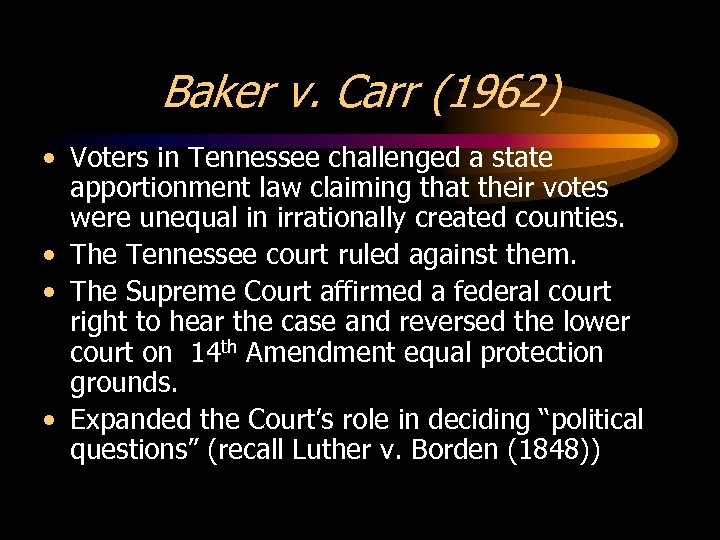
A Tennessee resident brought suit against the Secretary of State claiming that the failure to redraw the legislative districts every ten years as outlined in the state constitution resulted in rural votes holding more votes than urban votes. Carr 1962 A Supreme Court case that held that federal courts could hear cases that claimed that malapportionment of state legislatures. Baker appealed that decision up to the US. Should be allowed to function independently. In Baker v.
 Source: present5.com
Carr Summary Baker Carr 1962 A Summary Majority The complaint Baker alleged that by means of a 1901 statute of Tennessee apportioning the members of the General Assembly among the states 95 counties these plaintiffs and others similarly situated are denied the equal protection of the laws accorded them by the Fourteenth Amendment. Charles Baker a resident of an urban neighborhood in Tennessee filed suit in federal court against Joe Carr then Secretary of State of Tennessee. Decided March 26 1962. Impact Court gained power to rule on apportionment laws. Httpsbitly31VBsiO AP World History.
 Source: studylib.net
Source: studylib.net
This is a separation of powers issue. Baker appealed that decision up to the US. Decided March 26 1962. Supreme Court BAKER v. Appellants are persons allegedly qualified to vote for members of the General Assembly of Tennessee.
This site is an open community for users to do sharing their favorite wallpapers on the internet, all images or pictures in this website are for personal wallpaper use only, it is stricly prohibited to use this wallpaper for commercial purposes, if you are the author and find this image is shared without your permission, please kindly raise a DMCA report to Us.
If you find this site good, please support us by sharing this posts to your own social media accounts like Facebook, Instagram and so on or you can also bookmark this blog page with the title baker vs carr summary by using Ctrl + D for devices a laptop with a Windows operating system or Command + D for laptops with an Apple operating system. If you use a smartphone, you can also use the drawer menu of the browser you are using. Whether it’s a Windows, Mac, iOS or Android operating system, you will still be able to bookmark this website.